MAISON BOWIE
If you've ever read the celebrated 2003 novel The Da Vinci Code by Dan Brown, the name "Saunière" might sound familiar. It’s the first question Steve, the homeowner, asks when you enter his three-story townhouse in the remote village of Montazels in Southern France. His claim to fame? Owning the birthplace of The Da Vinci Code - literally - the home where the infamous priest Bérenger Saunière was born.


Steve, Jo, and their family bought the dilapidated townhouse sight unseen after spending a summer with friends in the small commune, home to just 500 people. This began their ten-year journey of restoring the dwelling and enjoying summer holidays as a break from the Australian winter.
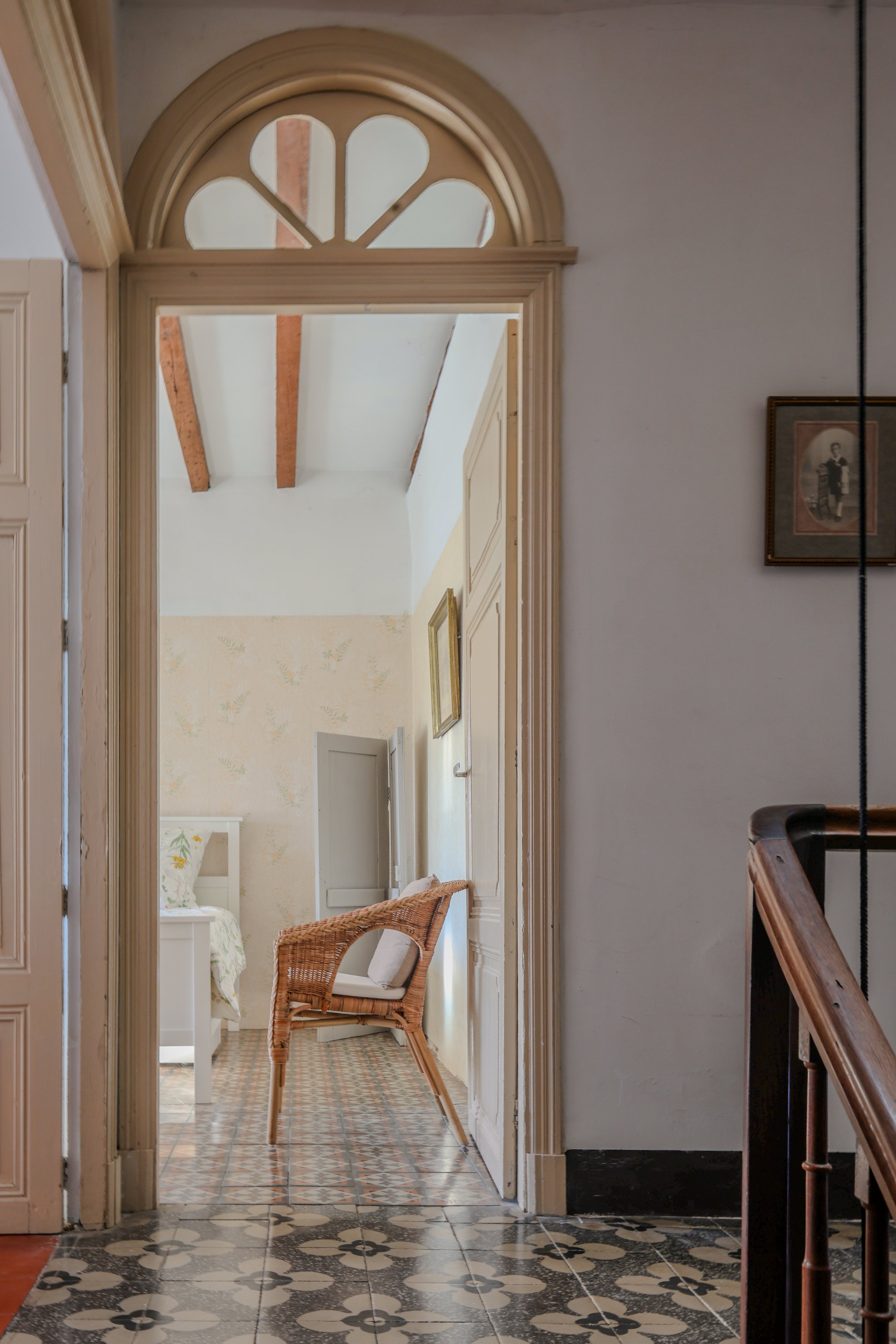
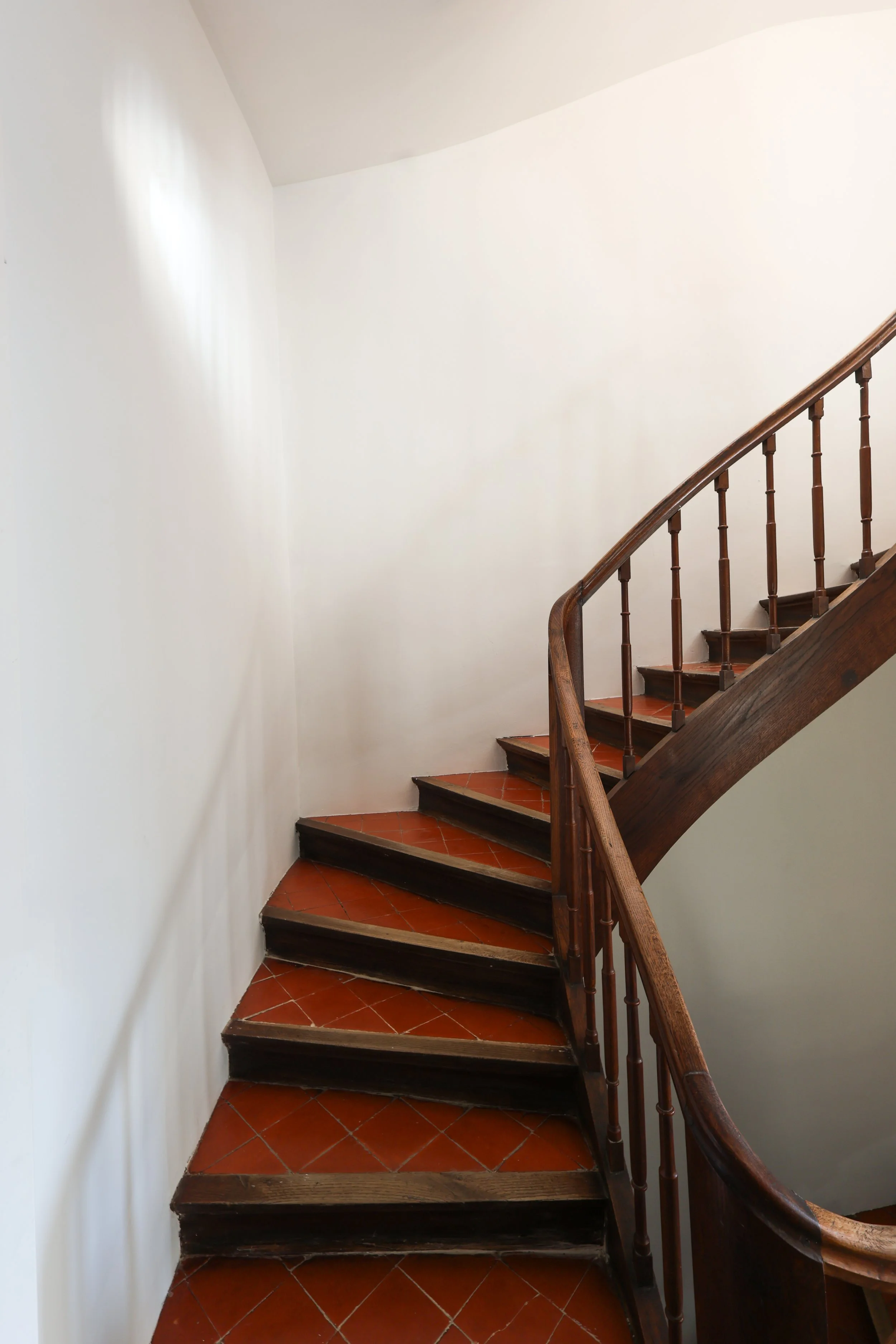
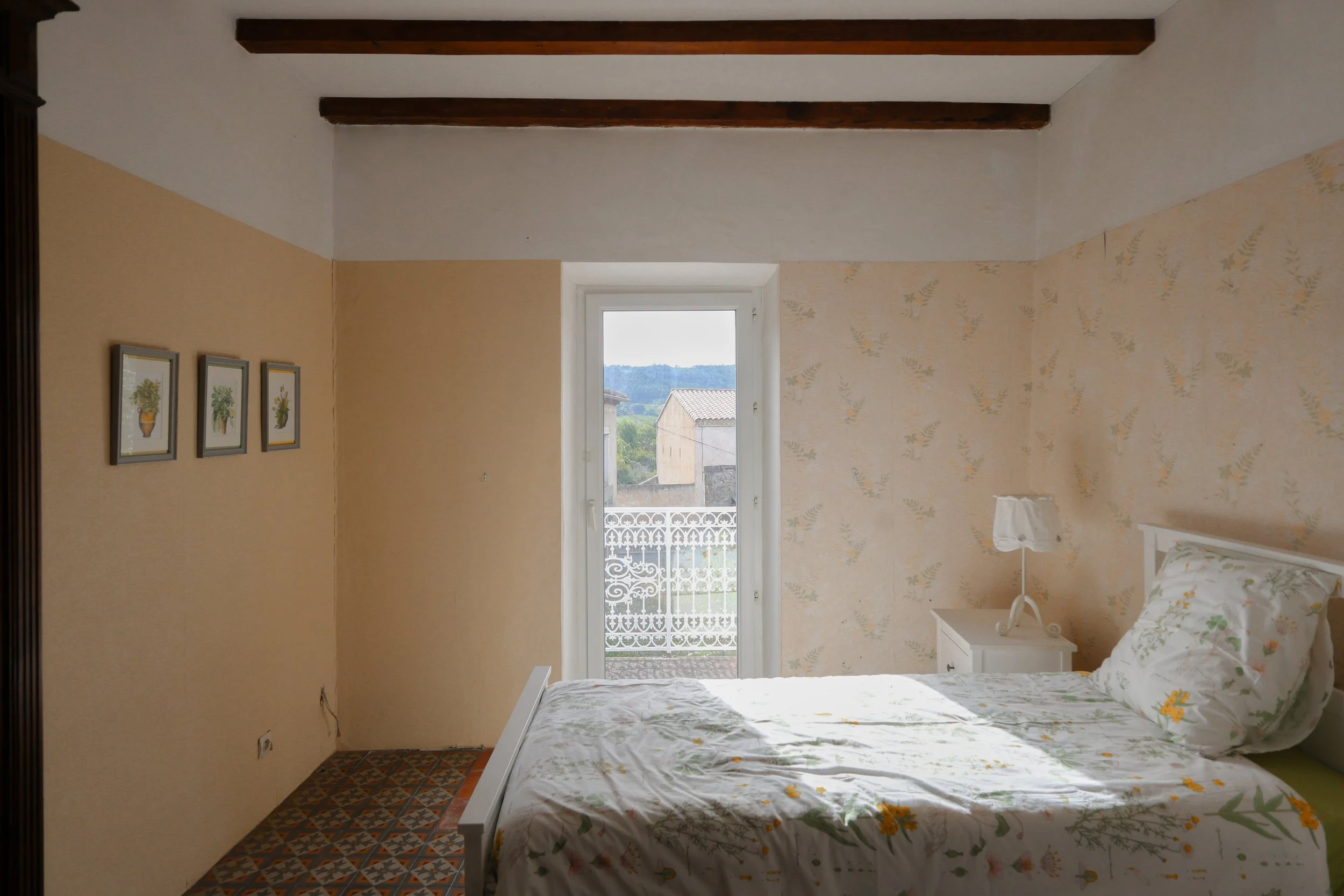
The thoughtful renovation has been a labour of love, carried out with great care and slow, deliberate planning. The three-story home features five bedrooms, three bathrooms, and a grand central staircase that spirals upward. Each year, Steve and Jo have chosen one room to renovate, making the process slow but steady. Bathrooms have been gutted, walls repainted, and timber-work restored, ensuring the 200-year-old house was habitable once again.
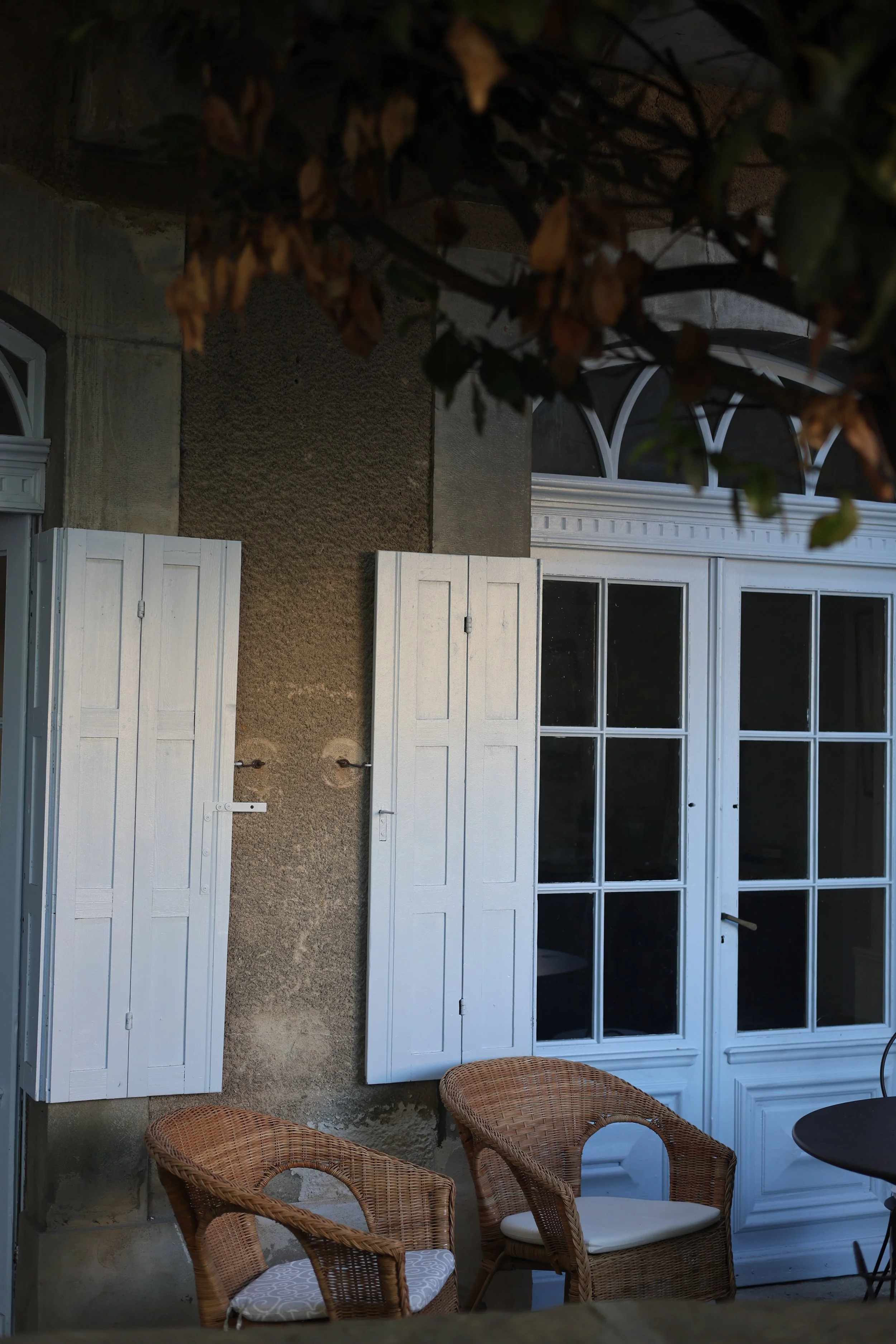
In the quiet town center, across from a playful fish fountain, the unassuming facade doesn’t shout modern restoration. The original shutters, now a soft baby blue, complement the stonework, while the iron lacework on three separate balconies frames views of a tranquil green square.
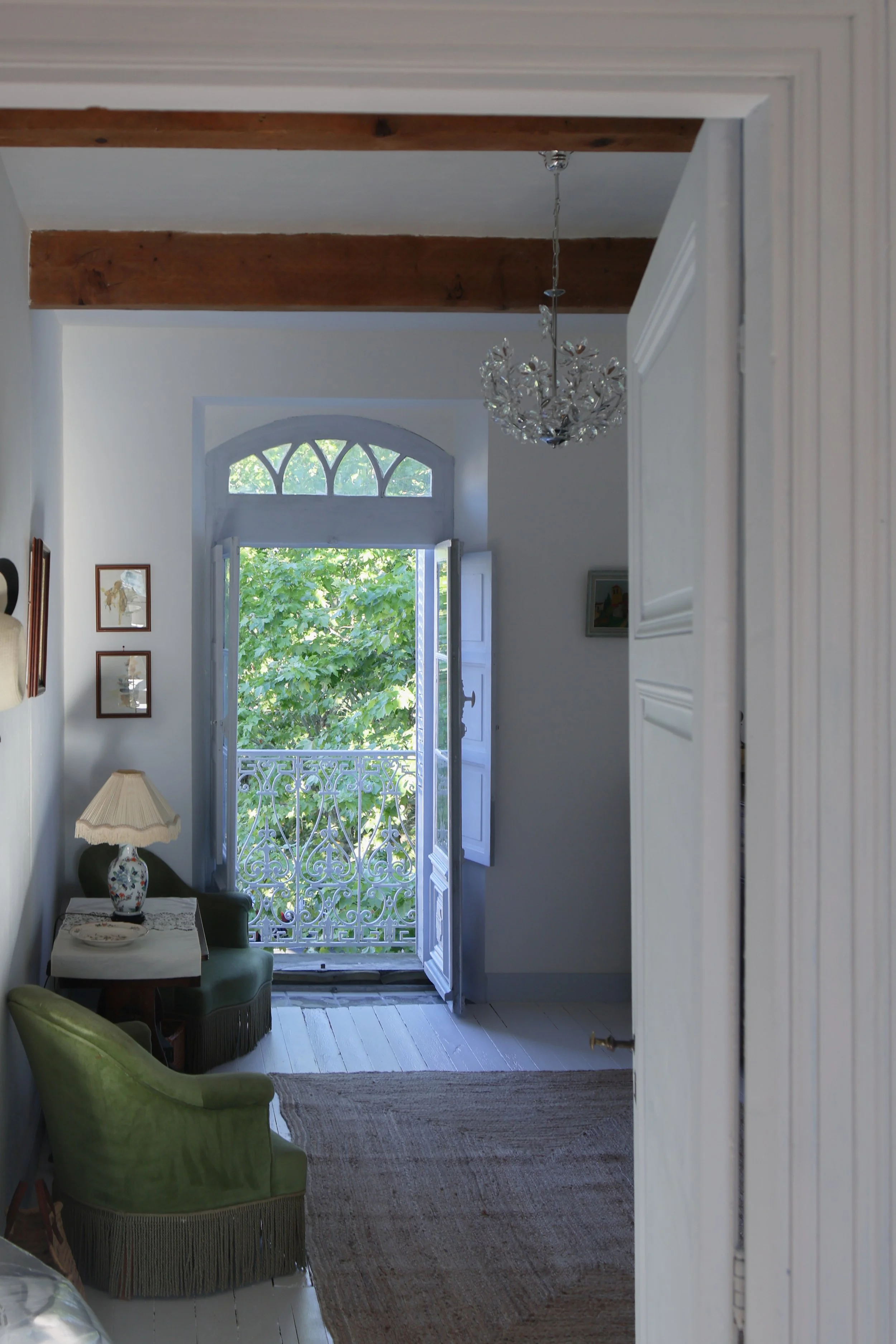
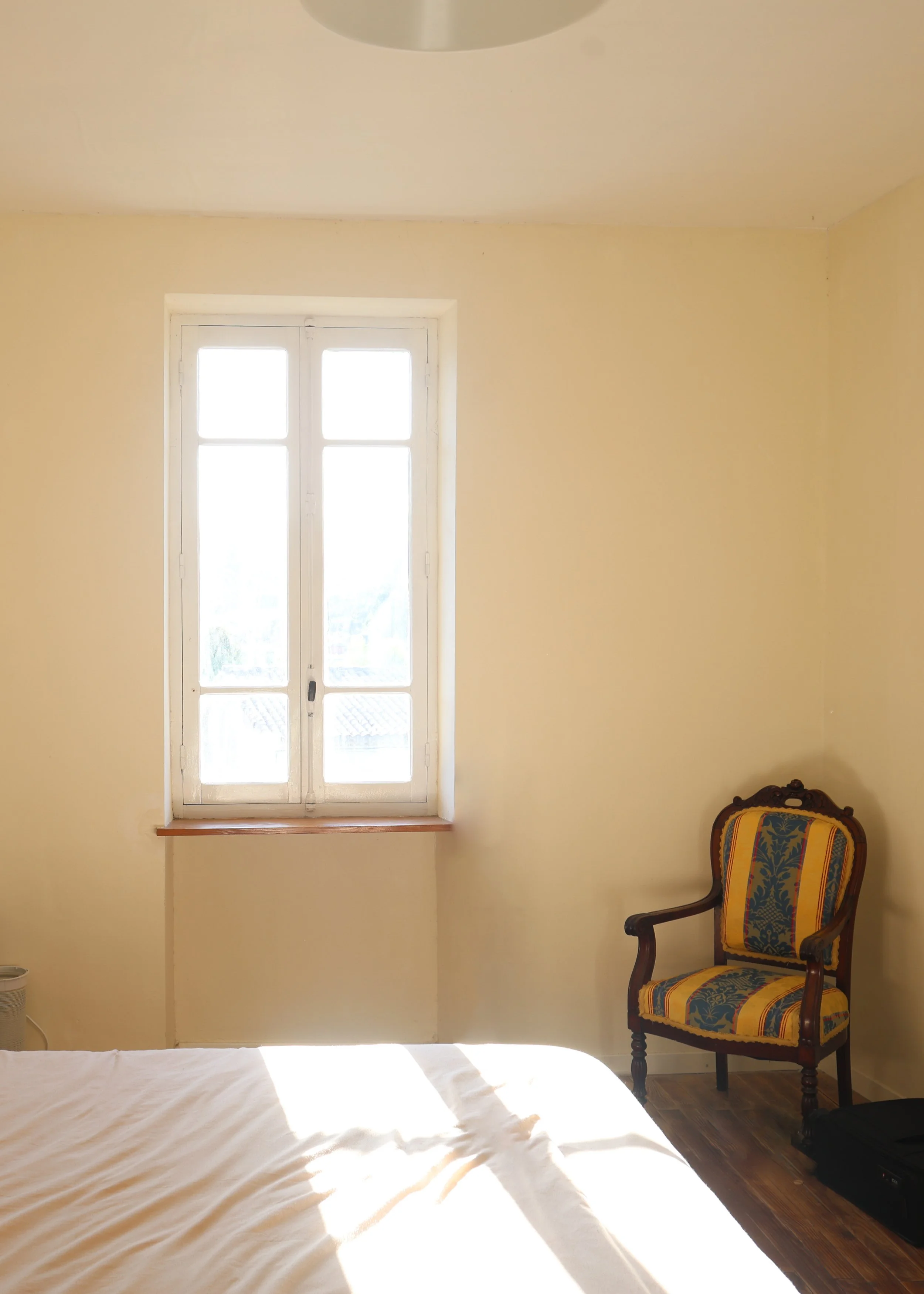
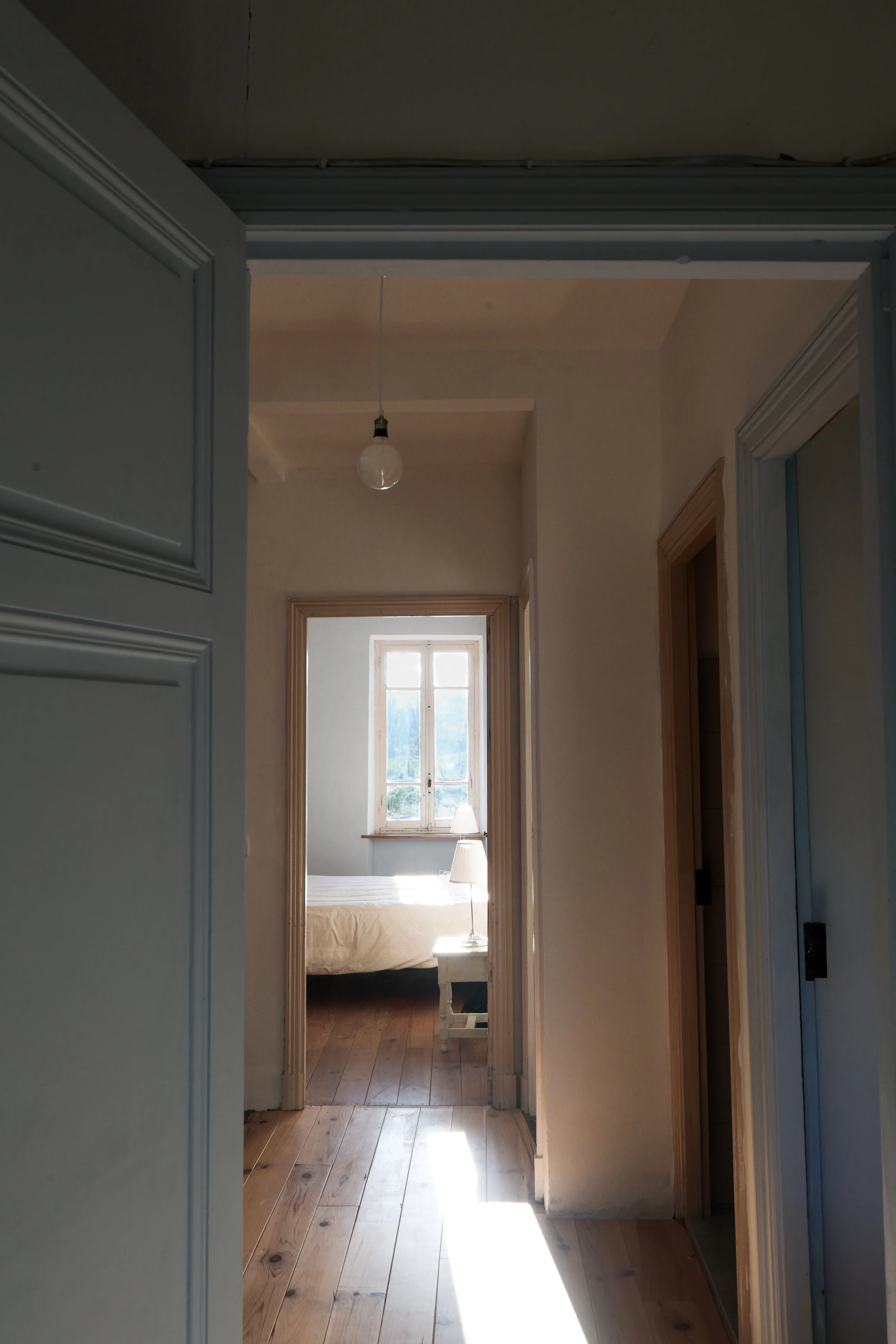
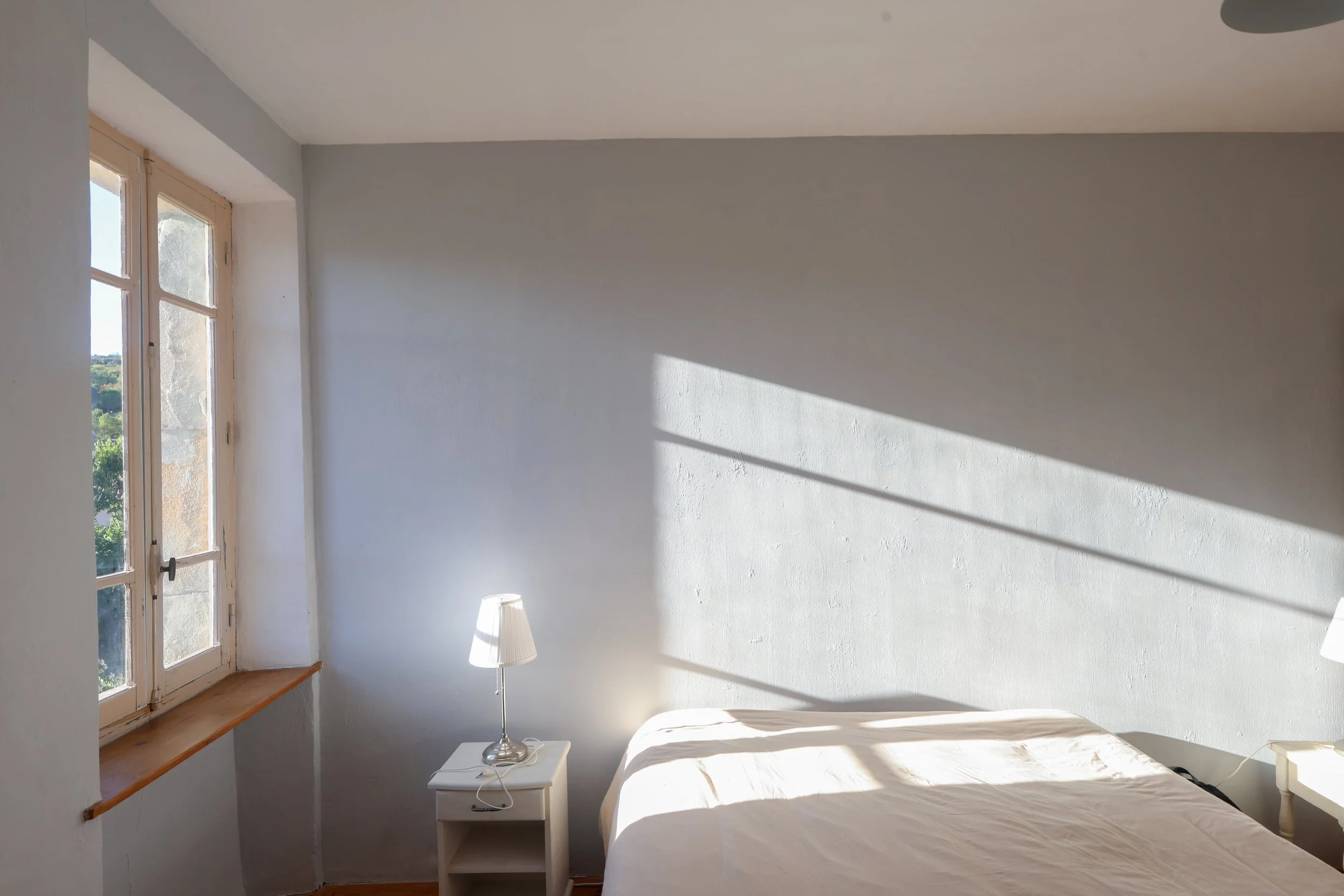
Color plays an important role in the home’s artful feeling. Each room has been painted in muted tones—pinks, yellows, and greens that capture the eastern and western light, creating a calming atmosphere of rest and relaxation. The original windows are integral to the home's character, framing the French countryside like paintings, draped in delicate sheer curtains, some of which Jo hand-sewed herself.
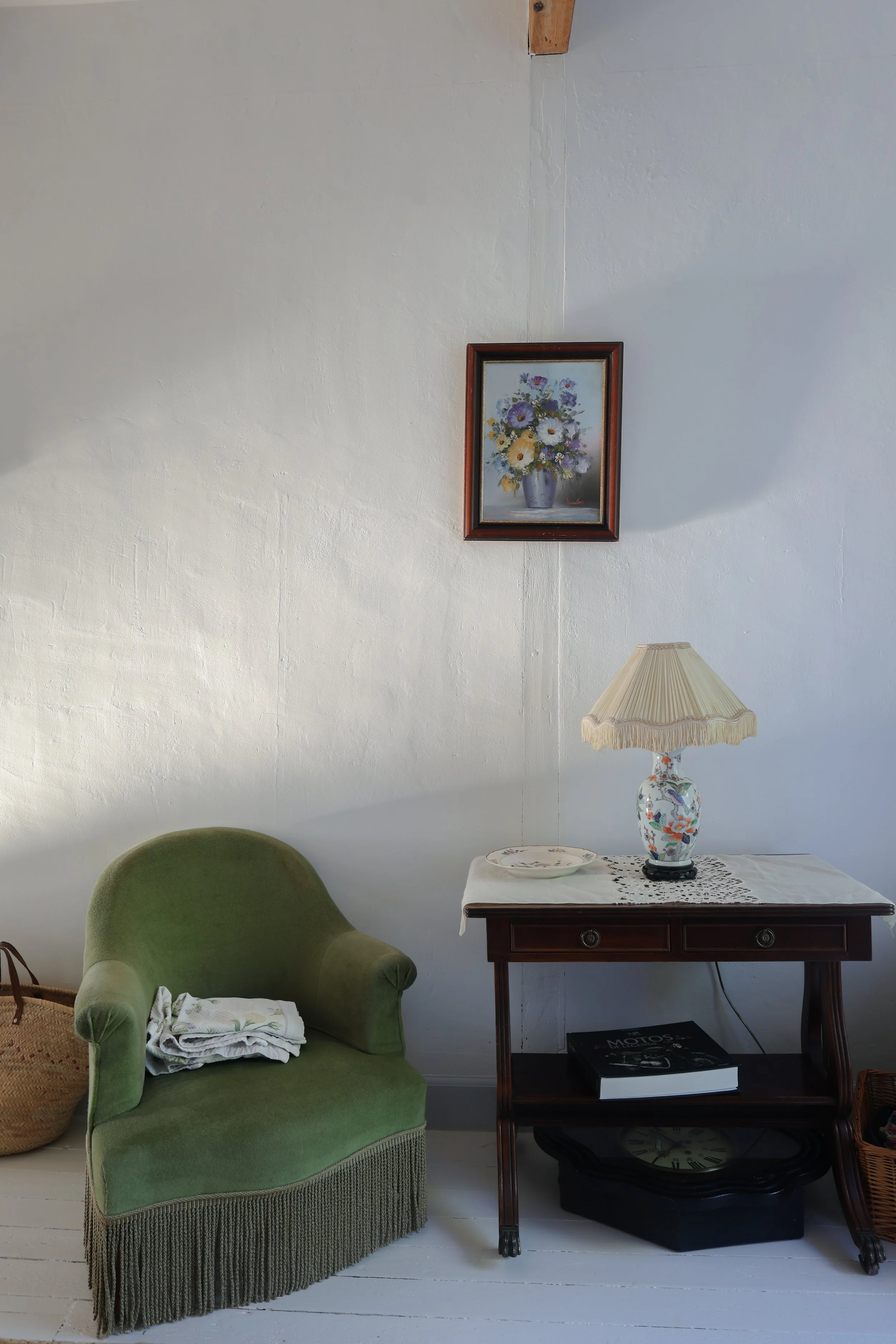
Furnishings are entirely secondhand. The couple has adopted a unique method for acquiring pieces: friends and travelers who stay in the home pay board by purchasing an item for the house. This has resulted in an eclectic mix of vintage furniture, paintings, lamps, ceramics, and even a piano. These items are simple, not attempting to mimic the French provincial aesthetic, but instead reflecting the joy and memories of the people who brought them. They’ve become an integral part of the house’s story and its travel tales back to Australia.
The house is a place for summer retreats, where doors and windows are often open, curtains billowing in the warm breeze, and someone is enjoying an afternoon siesta in the sun. Though it insists on relaxation and leisure, it is also a place for entertaining. The main dining room echoes with the sounds of lively dinners and sing-alongs around the piano, connecting to the compact kitchen where the original French stove stands proudly next to a farmhouse sink and simple, patterned curtains that hide the cupboards.
Half-read books are scattered across antique tables, evidence of slow, local living. Clotheslines are strung up, baskets filled with market vegetables, and empty wine bottles rest around the home—reminiscent of scenes from Call Me By Your Name. Steve and Jo know they are fortunate to have such a beautiful, secluded retreat. Although they only enjoy it during the warmer months, when the figs are ripe, they understand it will continue to evolve and change, just as their family grows and adds more layers of summer memories.